A Project Is Not a Department
Everyone could see their own part. Nobody could see the project. So we put it on the floor — literally.

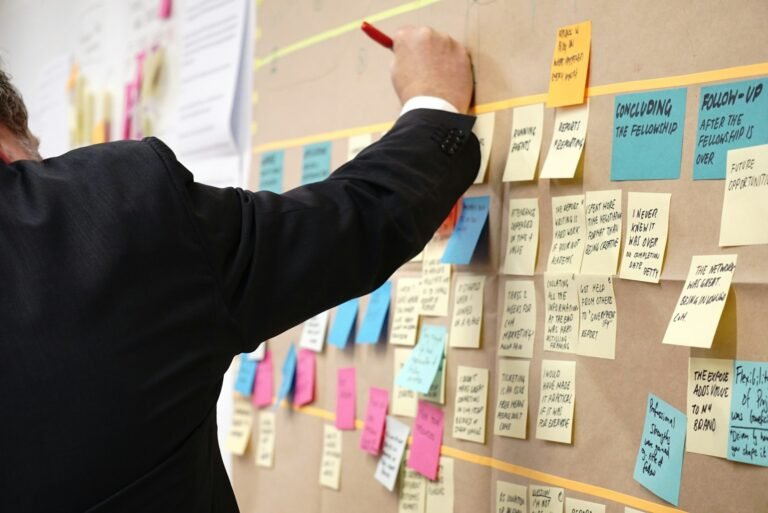
One of the challenges we encountered while working with project teams at Syngenta was interesting. Different functions were doing their jobs. Yet the project wasn’t always moving as smoothly as it should. The problem? Everyone could see their own part. Not necessarily the entire project. So we decided not to begin with a presentation on collaboration. Instead, we put the project on the floor. Literally. The participants worked on a visualisation of the project lifecycle, mapping milestones, functional roles, dependencies and potential choke points.
Suddenly, something changed. People could see where their work connected with somebody else’s. A delay in one function wasn’t just “their problem”. It had consequences downstream. A decision that looked small from one department’s perspective could affect another function weeks later. This visual exercise became the anchor for the rest of the day. We worked through scenarios. Perception versus facts. Empathetic lens. Mitigation. Then came Build the Bridge, an activity that brought out responsibility and ownership.
The SAAO framework helped participants look at the alignment challenges through a practical lens. And finally, Snakes & Ladders gave them a playful but serious way to work through real situations and possible disruptors. The outcome wasn’t a list of generic team-building takeaways. The team co-created ways of working. That distinction matters. When people participate in designing the solution, they are far more likely to own it. Sometimes collaboration isn’t about teaching people to “work together”.
It is about helping them see the system they are already a part of.